Tree sperm is out of control
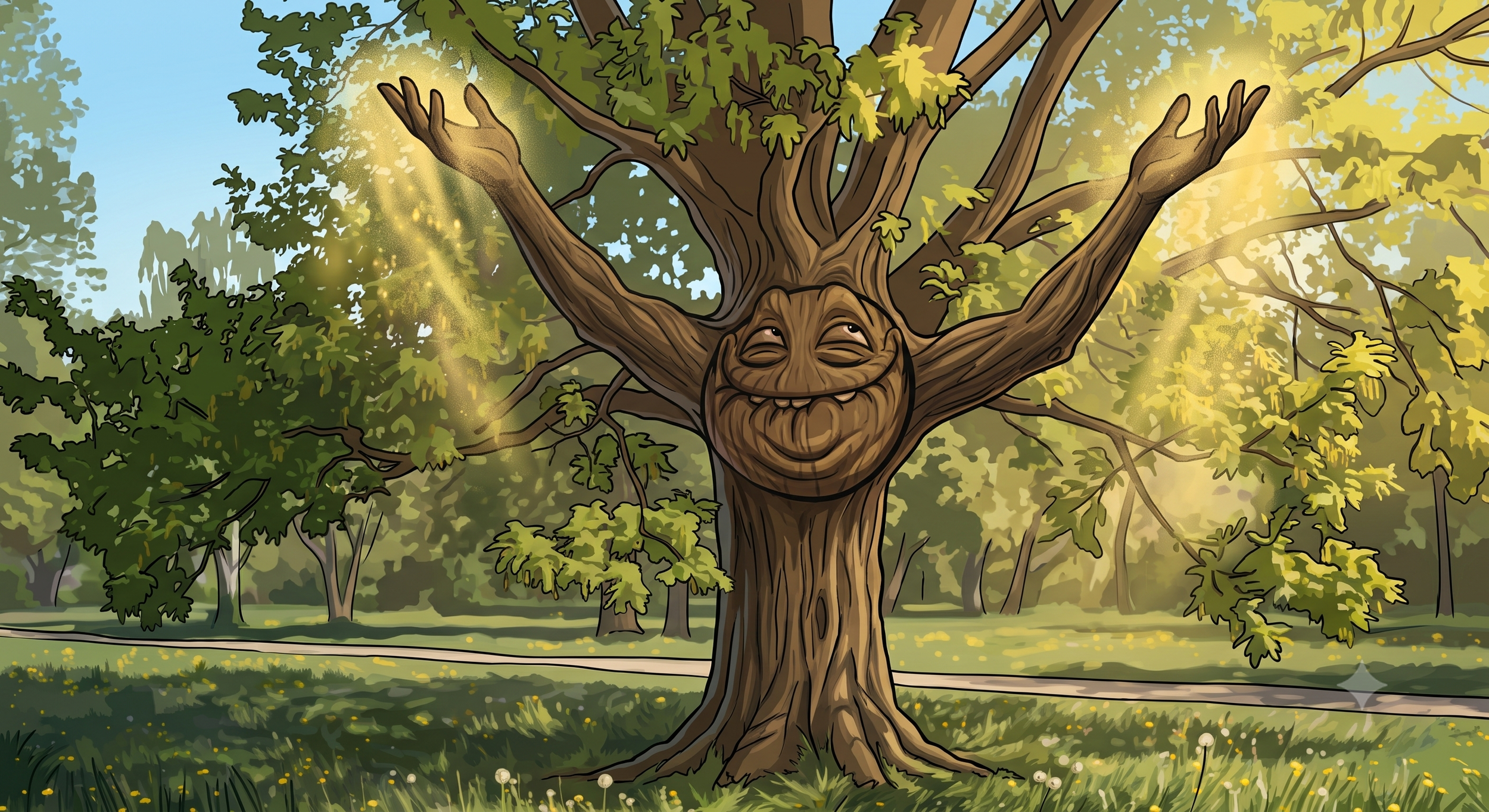
Male trees offering copious amounts of sperm
I was having a conversation about plants in Florida with my partner. She was mentioning how developers here, in Florida but also elsewhere, choose male trees primarily to design with for … reasons. Having a natural interest in permaculture, I found this interesting. Why would humans want more tree sperm in our environments?
Let’s take some quick stock in anecdotal stories of pollen and allergies. I have a few people in my orbit who claim seasonal allergies are getting worse. They also claim it’s evident by all of the pollen on our cars, sidewalks, and the yellow rivers of gold when if rains. I’ve been hearing this for a few years now and thought, well, we’re all also getting older. We’re eating worse and overburdening already burdened organic systems in place to manage extra histamine in the body.
But upon further investigation, I found the following:
Master planned communities like Lakewood Ranch will design their community and shopping spaces.
I’m often in or around Lakewood Ranch (LWR), Florida. It’s hailed as one of the largest master planned communities in the country. This means variables that optimize for cost and beauty will be on the menu. Unfortunately, this means often using male clones to design the spaces for cleanliness.
Landscape designers favor male clones.
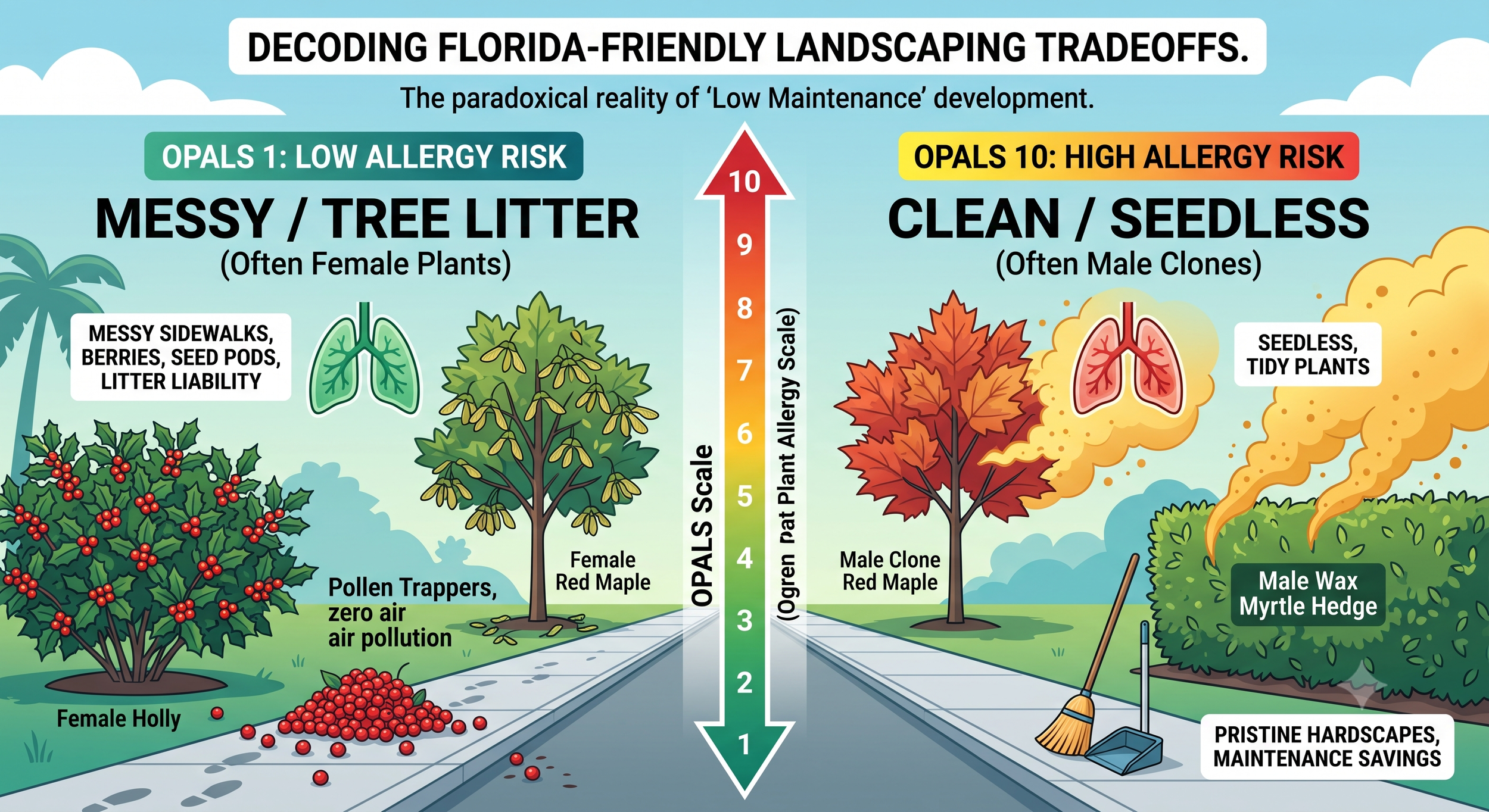
Male clones. Sounds like a chapter in a space-themed romance novel. But actually, here in LWR, it provides a few things. Cloning (really just propagation as most gardeners know it) is just a way to cheaply and reliably produce trees that will have similar or relatively identical growth. This means you can biologically CTRL + C and CTRL +V these trees and they look the same. Most importantly male trees do NOT create litter that falls on the ground. This is the primary reason.
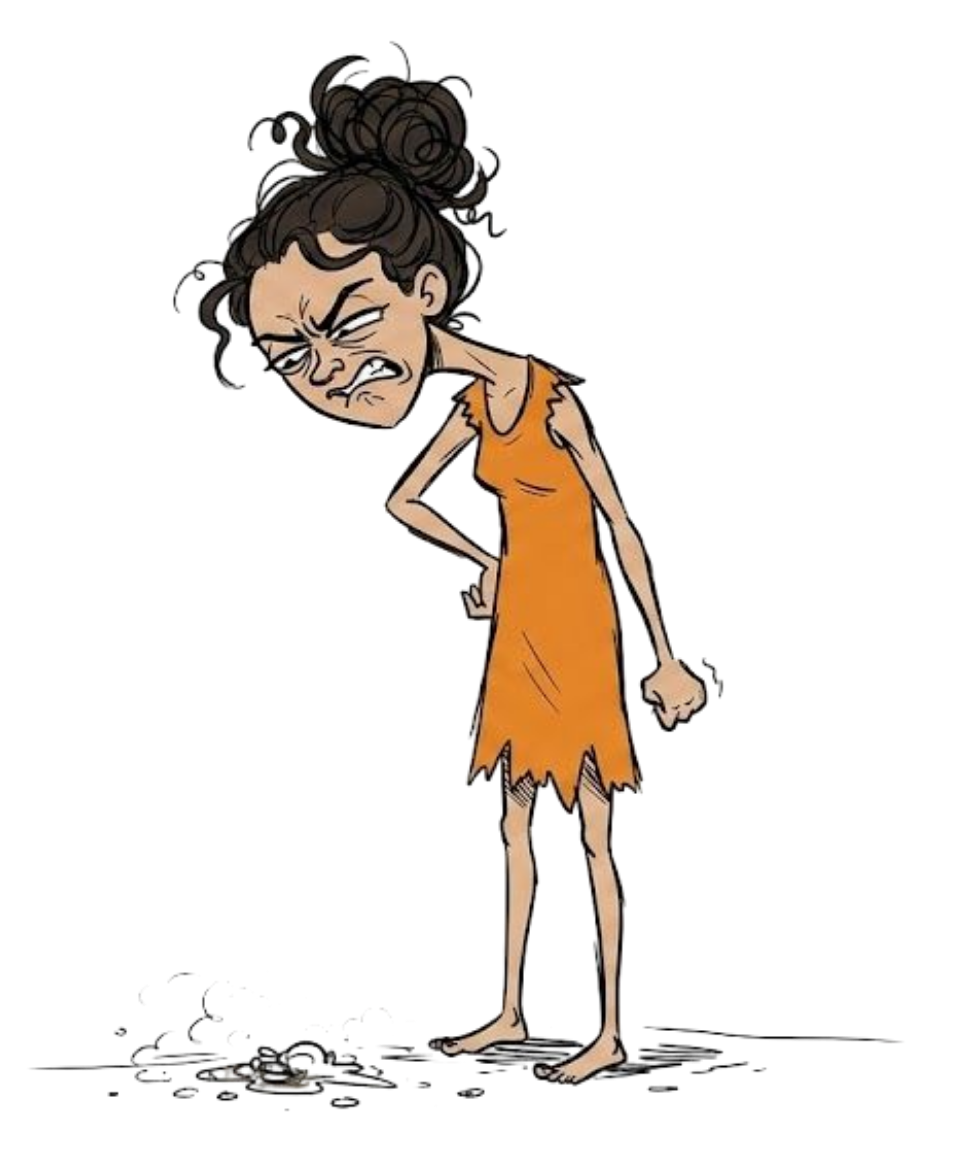
Hear that ladies? The developers think you’re messy.
When you’re developing for an efficient space you need reproducibility in visual appearance and cleanliness! With female trees that create litter (especially fruit bodies, seed pods, etc) you can create accident risk for the public and otherwise just be on the hook for weekly/monthly cleaning of these spaces. Developers do not want to deal with this.
Landscape designers are incentivized to keep females absent.
As mentioned, the females drop litter. But there’s another aspect of this equation that is a bit more passive. Male plants do not have the “fruit tax” to pay when growing. Growing and bearing fruit after a tree matures is metabolically taxing. Males do not suffer from this “problem.” In fact, pollen is so metabolically cheap to make it allows canopy growth to outpace its female counterparts much faster. It’s unfortunate because female plants are capable of sequestering pollen from the air, acting as a passive filter over time.
Landscapers are optimizing for variables that are not balanced for allergy health.
The Ogren Plant Allergy Scale (OPALS) is a universally recognized 1 to 10 rating system developed by horticulturalist Thomas Ogren. It measures a plant or tree's potential to trigger allergies in humans. The Florida-Friendly Landscaping™ (FFL) program has a mix of natives that score high to medium on this OPALS scale. Great that these natives are being incorporated, not great that many of them score high on this scale.
In the end, we’re monocropping nature again, but instead of creating food, we’re creating the spaces in which you will live and your communities will play within. Now. This writeup may propose all of this as the Devil’s work and environmentally evil. In reality, I don’t really know the overall implications. Locally speaking, could a surface area the size of a large shopping plaza or large community gathering space really make a difference in the overall expression and distribution of pollen? Will that have a sizable effect on people’s allergy experience? I really do not know.
But consider that, planned spaces will most likely only grow in number. The truly natural spaces (in which people live) will shrink and be replaced by HOA approved grasses and landscaping that promote this subtle monocropping experience. People are highly variable in their sensitivities to pollen and environmental agents that irritate allergies.
If you do live in heavily managed HOA space, inquire about their planting palettes. Looks up what the OPALS rating is for the plants in your space and your neighborhood. Chances are they are uniformly blanketed with local and native species but not nothing to accommodate the natural expression of male/female ratios that provide a balance in pollen and pollen clearance. In effect …. tree sperm is out of control.